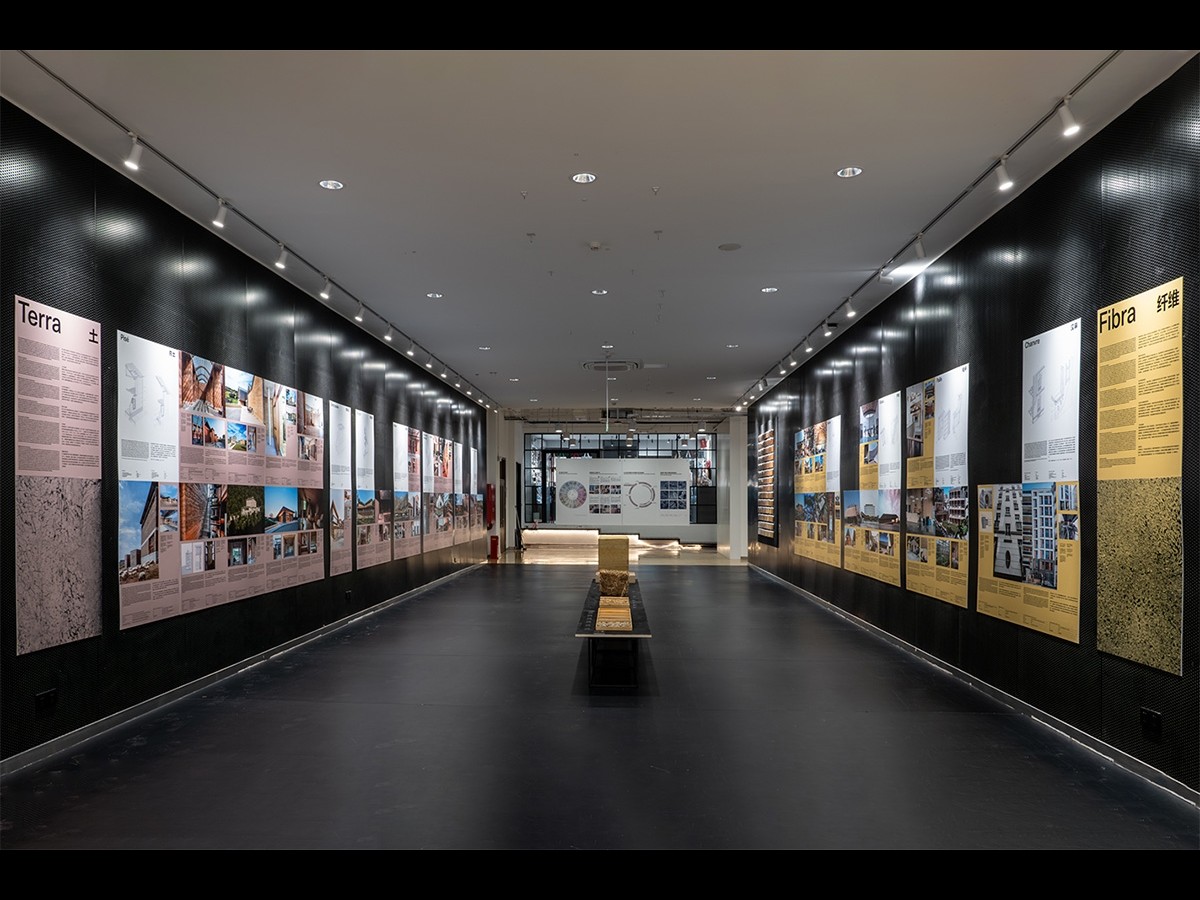


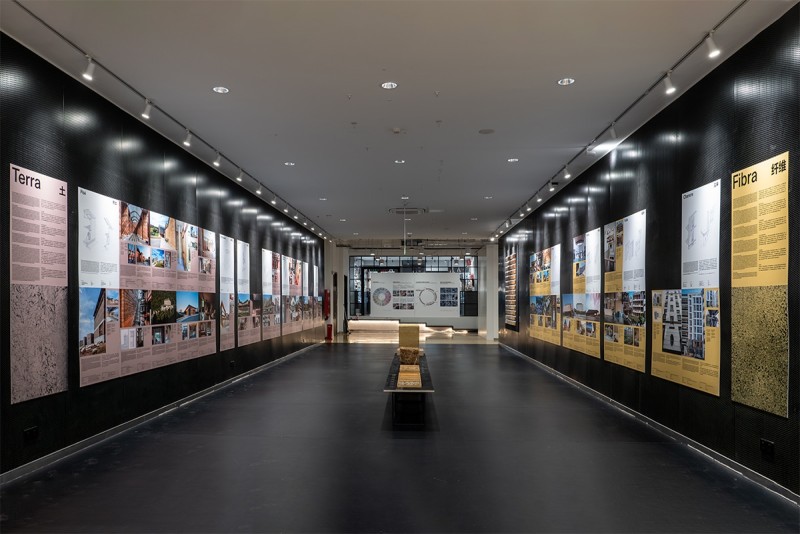
The exhibition “TerraFibra architectures” will be presented from November 21, 2025, to December 31, 2025, at the Beijing University of Architecture in China.
Rammed earth, poured earth, cob, adobe, wattle and daub, or compressed earth blocks; walls insulated with straw bales or hemp-lime; bamboo frameworks; reed roofing… In the face of the climate challenge and the need to adapt construction systems, the use of bio-based and geo-based materials offers sound and sustainable technical solutions. Some have been proven over centuries; others are being invented today. Combining earth and plant fibres highlights the value of material hybridity and reasserts the importance of constructive intelligence, using the right amount of the right material in the right place. Emphasising this complementarity of materials also helps avoid the pitfall of an industry focused on a single technical solution, a model that is both particularly polluting and ultimately without a future.
The exhibition is organised around fibres according to the plant used (hemp, straw, reed, bamboo) and around raw earth according to construction techniques (rammed earth, poured earth, cob, adobe, compressed earth blocks, wattle and daub, and earth plaster). Photographs, full-scale prototypes, technical drawings, and material samples allow visitors to experience these abundant materials first-hand, while admiring the creativity of the architectures on display.
The world’s leading award for contemporary architecture in raw earth and plant fibres, the TERRAFIBRA Award 2021 brings together the TERRA Award 2016, an international prize for earthen architecture initiated by Dominique Gauzin-Müller and led by amàco and CRAterre, and the FIBRA Award 2019, the global award for architecture using plant fibres organised by amàco. More than 300 teams from 62 countries responded to this call for entries, continuing the momentum of previous editions and fostering a network of professionals who exchange knowledge and support one another.
In the wake of COP26, the “TerraFibra Architectures” event confirms that virtuous practices exist worldwide, across a wide range of contexts. Enthusiastic, passionate, and generous, the actors behind these projects make the use of bio-based and geo-based materials credible, while highlighting the economic, social, and ecological foundations of their work and commitment. They demonstrate that it is possible to build differently, drawing on local resources and know-how without renouncing innovation. Rooted in their territories, these frugal and creative architectures open up new horizons for construction and renovation.
The exhibition is organised around fibres according to the plant used (hemp, straw, reed, bamboo) and around raw earth according to construction techniques (rammed earth, poured earth, cob, adobe, compressed earth blocks, wattle and daub, and earth plaster). Photographs, full-scale prototypes, technical drawings, and material samples allow visitors to experience these abundant materials first-hand, while admiring the creativity of the architectures on display.
The world’s leading award for contemporary architecture in raw earth and plant fibres, the TERRAFIBRA Award 2021 brings together the TERRA Award 2016, an international prize for earthen architecture initiated by Dominique Gauzin-Müller and led by amàco and CRAterre, and the FIBRA Award 2019, the global award for architecture using plant fibres organised by amàco. More than 300 teams from 62 countries responded to this call for entries, continuing the momentum of previous editions and fostering a network of professionals who exchange knowledge and support one another.
In the wake of COP26, the “TerraFibra Architectures” event confirms that virtuous practices exist worldwide, across a wide range of contexts. Enthusiastic, passionate, and generous, the actors behind these projects make the use of bio-based and geo-based materials credible, while highlighting the economic, social, and ecological foundations of their work and commitment. They demonstrate that it is possible to build differently, drawing on local resources and know-how without renouncing innovation. Rooted in their territories, these frugal and creative architectures open up new horizons for construction and renovation.