
How can existing and emerging metropolitan medical deserts be addressed? What are the expectations of urban healthcare professionals? Where should new forms of healthcare delivery facilities be set up and what architectural approaches should they follow?
While the northeast corner of Paris and most municipalities in the inner suburbs are medically underserved, the central and western areas of the metropolis are now also losing medical practitioners. This reflects the conditions healthcare professionals encounter when establishing themselves there, as individual practices that are often housed in domestic architectural forms are not successfully being passed on to successors. Neither the places that hosted the medical practices of the past nor the all-too-infrequent healthcare programs in new builds seem to address the accessibility and functionality required for such premises. They also do not meet the expectations for collaboration and the financial capacities for the latest generation of healthcare professionals.
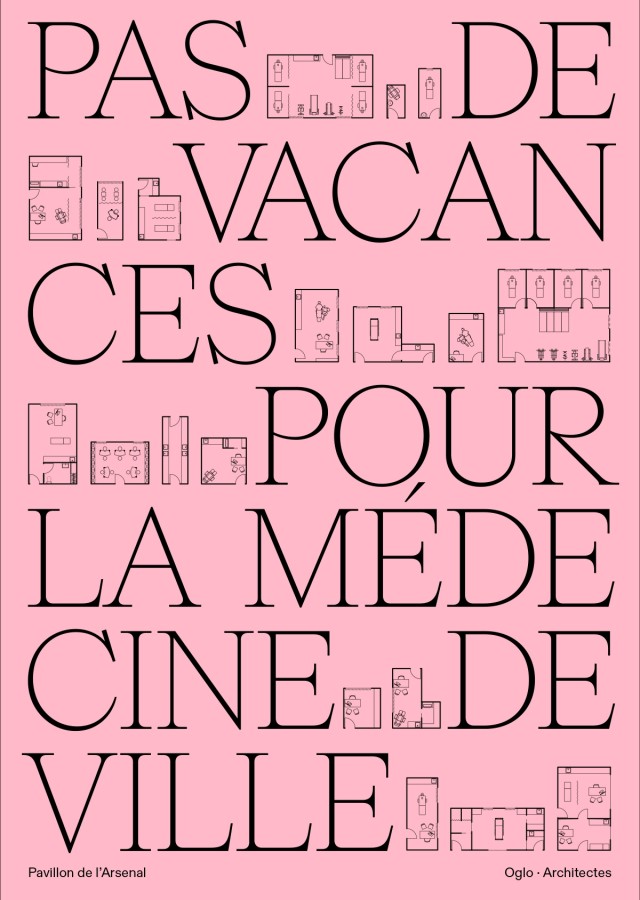
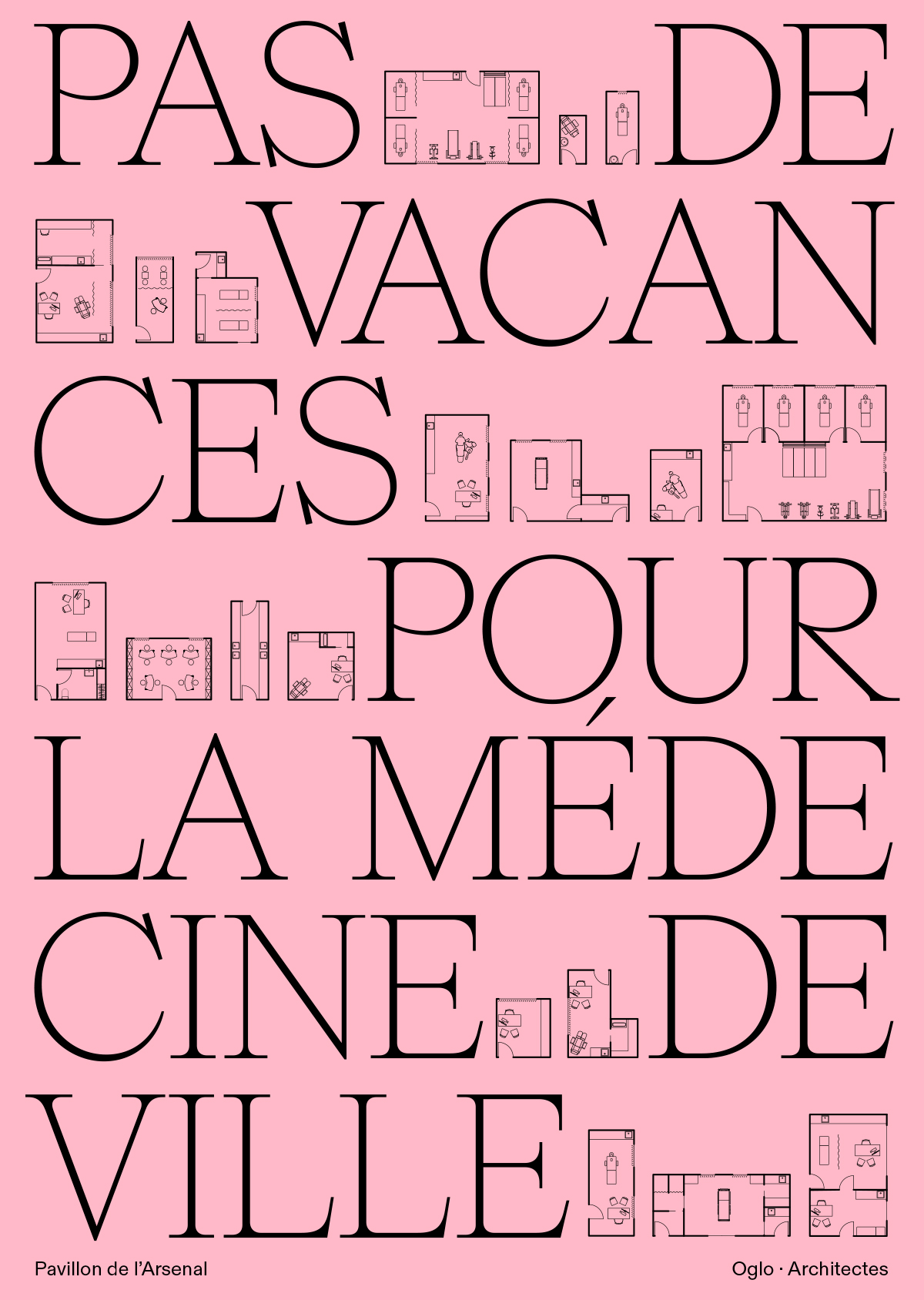
The “No Vacancies for Urban Medecine” study, which was carried out by architects from Oglo, aims to demonstrate the potential of other possible locations. Supplemented by practitioner testimonials, international outlooks, and a historical perspective, it makes the case for rebuilding a primary care network based on projects involving tailored architectures. The envisioned locations are defined in the interval between private practice medicine and hospital operations practices. The variety of denominations—medical offices, group practices, health centers, multidisciplinary residential facilities, etc.—reveals that the program isn’t quite set in stone yet, but holds exciting potential within forms that requires further exploration.
The very challenge of this study is to define this novel, hybrid, and mixed model. A new kind of healthcare program that is designed to address both everyday needs and times of health crises could then become a key feature of the Resilient City.
The “No Vacancies for Urban Medecine” study, which was carried out by architects from Oglo, aims to demonstrate the potential of other possible locations. Supplemented by practitioner testimonials, international outlooks, and a historical perspective, it makes the case for rebuilding a primary care network based on projects involving tailored architectures. The envisioned locations are defined in the interval between private practice medicine and hospital operations practices. The variety of denominations—medical offices, group practices, health centers, multidisciplinary residential facilities, etc.—reveals that the program isn’t quite set in stone yet, but holds exciting potential within forms that requires further exploration.
The very challenge of this study is to define this novel, hybrid, and mixed model. A new kind of healthcare program that is designed to address both everyday needs and times of health crises could then become a key feature of the Resilient City.